Fulfilment is the work involved in getting a customer’s order from your stockroom to their door. For an online retailer, it usually includes receiving stock, storing it, processing orders, picking products, packing parcels, arranging dispatch and dealing with returns.
A successful sale creates a promise. Fulfilment is how your business delivers on that promise: the correct product, in suitable packaging, sent through the agreed delivery service. This guide explains the basics for UK retailers deciding how to manage that work.
What does fulfilment include?
The visible part is a parcel leaving the warehouse. Behind it sits a chain of stock movements, decisions and information updates. Each stage needs an owner and a clear process.
- Goods-in: checking incoming products against the expected delivery and recording discrepancies.
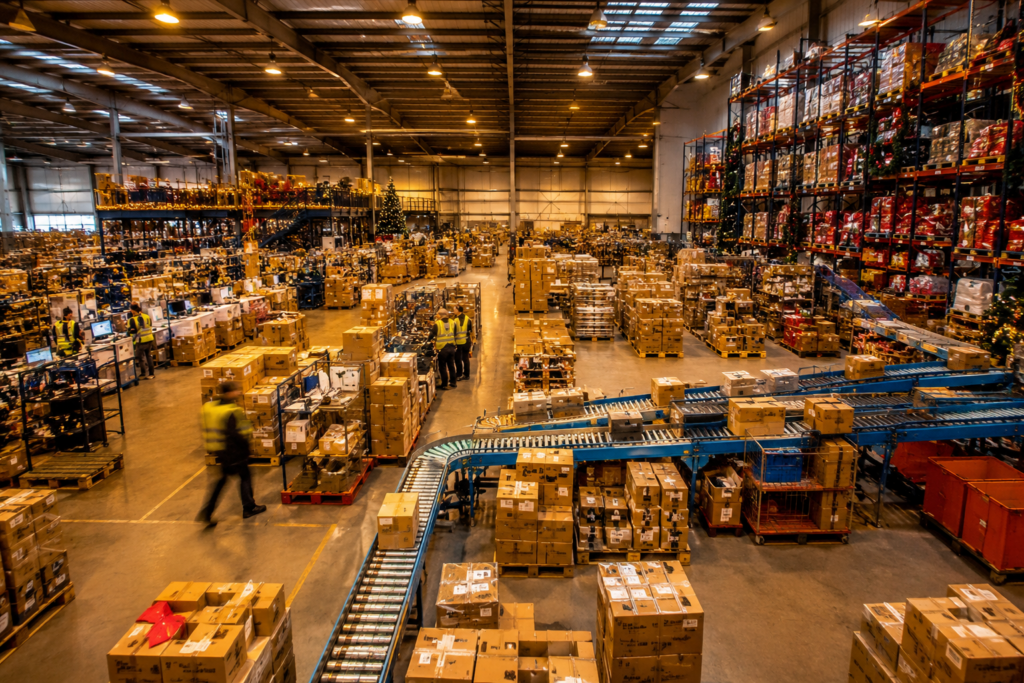
- Storage: placing stock in identifiable locations and keeping available quantities accurate.
- Order processing: transferring an eligible customer order into the warehouse workflow.
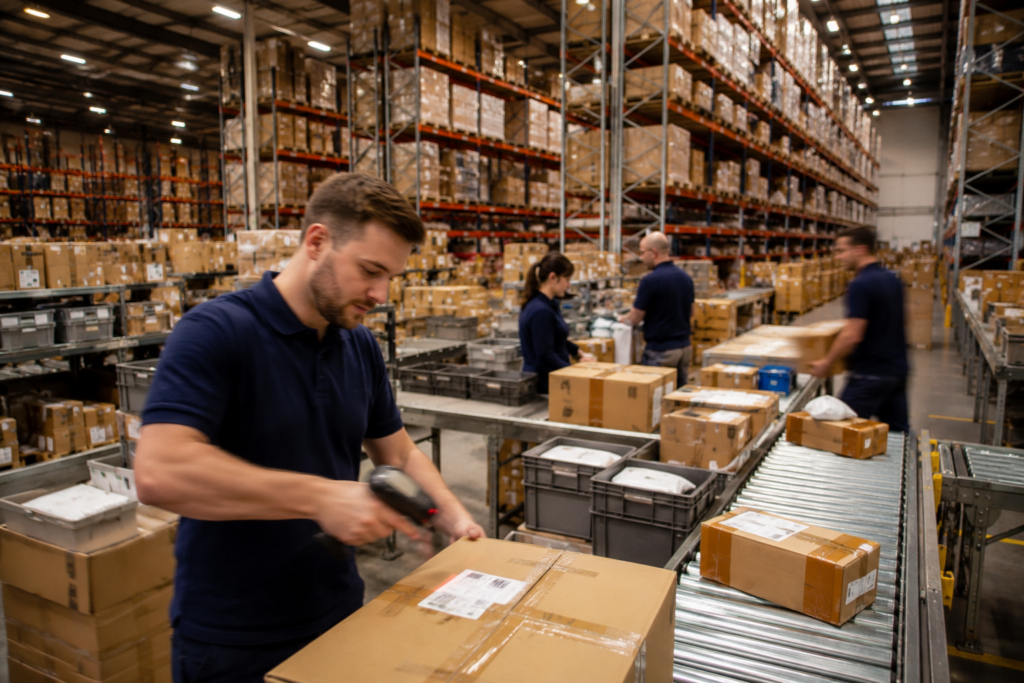
- Picking: selecting the correct SKU, variant and quantity.
- Packing: protecting the product and including any agreed inserts or documentation.
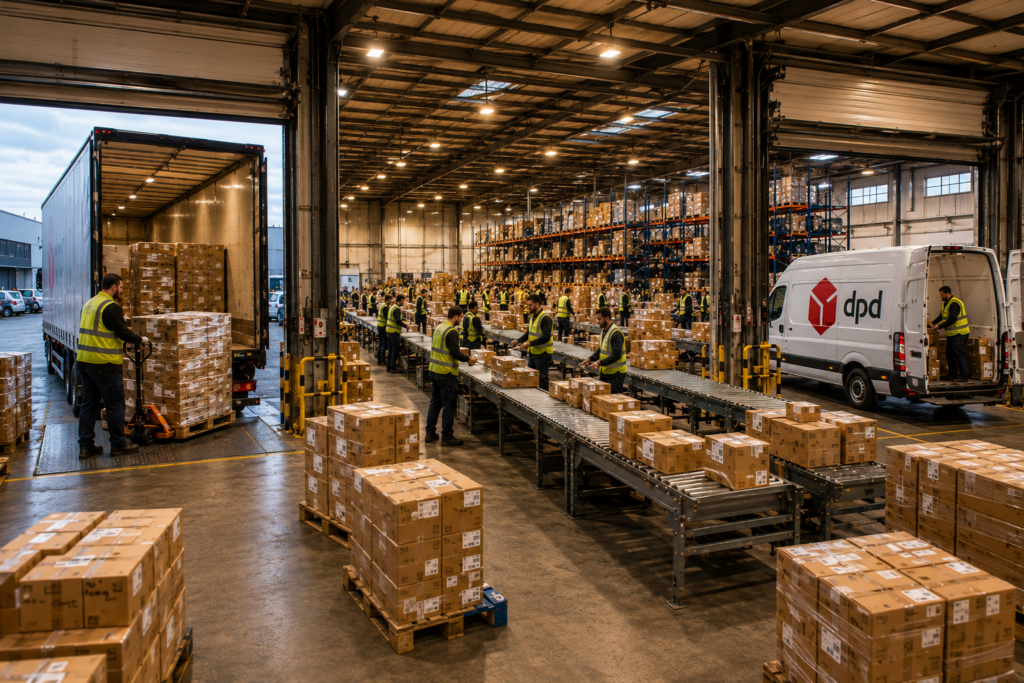
- Dispatch: labelling the parcel and handing it to the carrier.
- Returns: receiving returned items and applying the retailer’s inspection and stock rules.
A simple example: from checkout to dispatch
Imagine a customer buying two blue bottles from your website. Your system must identify the blue variant, reserve two units and send the order to the right location. A picker collects the bottles, a packer checks them and prepares a suitable parcel, and a shipping label assigns the selected carrier service.
The order status and tracking details then need to reach your store. If one bottle comes back, the return must be linked to the original order and checked before it becomes available for resale. A stock record that skips that check can lead to selling a damaged item.
Fulfilment, delivery and logistics: what is the difference?
Fulfilment covers preparing and completing the order. Delivery is the transport stage that takes the shipment to the customer. Logistics is broader and can include inbound freight, warehousing, distribution and the movement of returned goods.
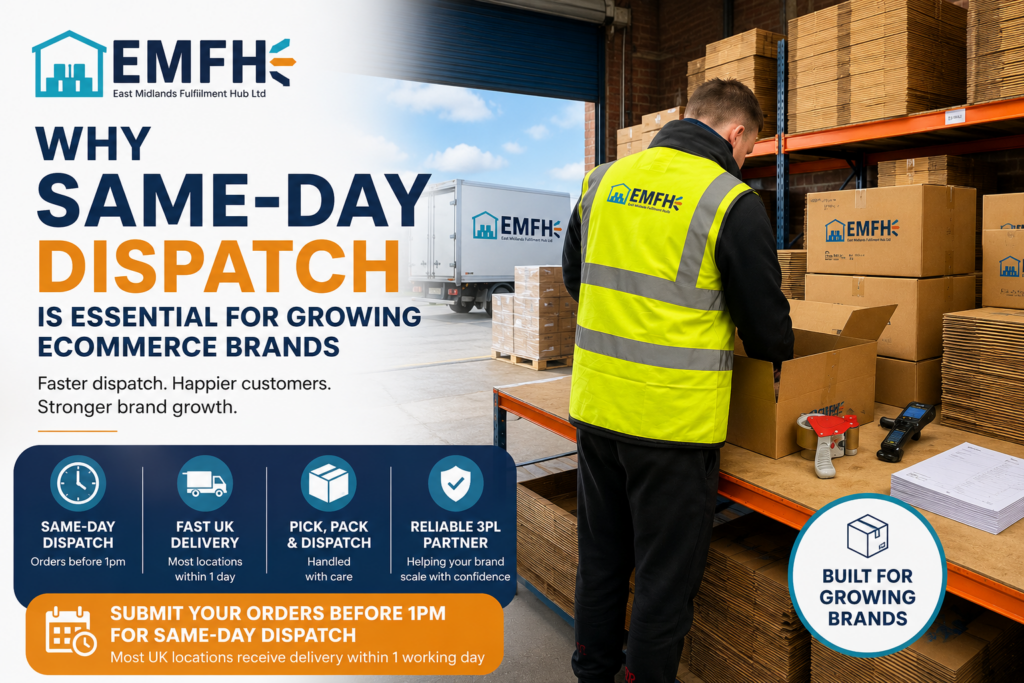
This distinction matters when making customer promises. Same-day dispatch means a parcel leaves the fulfilment operation that day. It does not automatically mean the customer receives it that day. Delivery depends on the purchased carrier service, destination and any service restrictions.
Three ways to fulfil online orders
Handle fulfilment in-house
Your team receives, stores, packs and dispatches the stock. This can suit a business with manageable volumes or products that need founder-led customisation. Include your own time, premises, equipment and cover for busy periods when assessing the cost.
Use a third-party logistics provider
A 3PL handles agreed operations on your behalf. You retain responsibility for your products, customer offer and commercial decisions, while the provider runs the warehouse activities covered by the service agreement. Learn more about EMFH’s pick and pack fulfilment service.
Combine more than one model
A retailer might keep personalised orders in-house and outsource standard products, or use separate arrangements for marketplace and direct website sales. The important requirement is accurate stock allocation so two locations do not promise the same unit.
How do you know your fulfilment is working?
Track order accuracy, orders dispatched within the agreed window, stock discrepancies, damage reports and the time taken to process returns. Define each measure clearly. An order can be packed correctly but still miss its carrier collection, so accuracy alone does not describe the customer experience.
Review exceptions as well as averages. A list of orders waiting for stock, an address correction or a packing decision often reveals more useful problems than a single headline percentage.
Frequently asked questions
Is fulfilment only for large retailers?
No. Every retailer fulfils orders, even when that means packing them at home. Whether outsourcing makes sense depends on workload, product requirements and the full cost of each option.
Does a fulfilment company own my stock?
Storage and operational handling do not normally mean the provider buys the goods. Check ownership, insurance, liability and release terms in the agreement.
Can a fulfilment provider handle returns?
Many can, but inspection, photography, repacking and disposal arrangements vary. Agree the workflow and charges before sending returned stock.
Discuss your fulfilment requirements with EMFH
East Midlands Fulfilment Hub is based in Nottingham and provides fulfilment support for online retailers. Explore our fulfilment services or request a tailored quote. Bring your monthly order volume, SKU count, product dimensions and current shipping profile so the discussion reflects your actual operation.