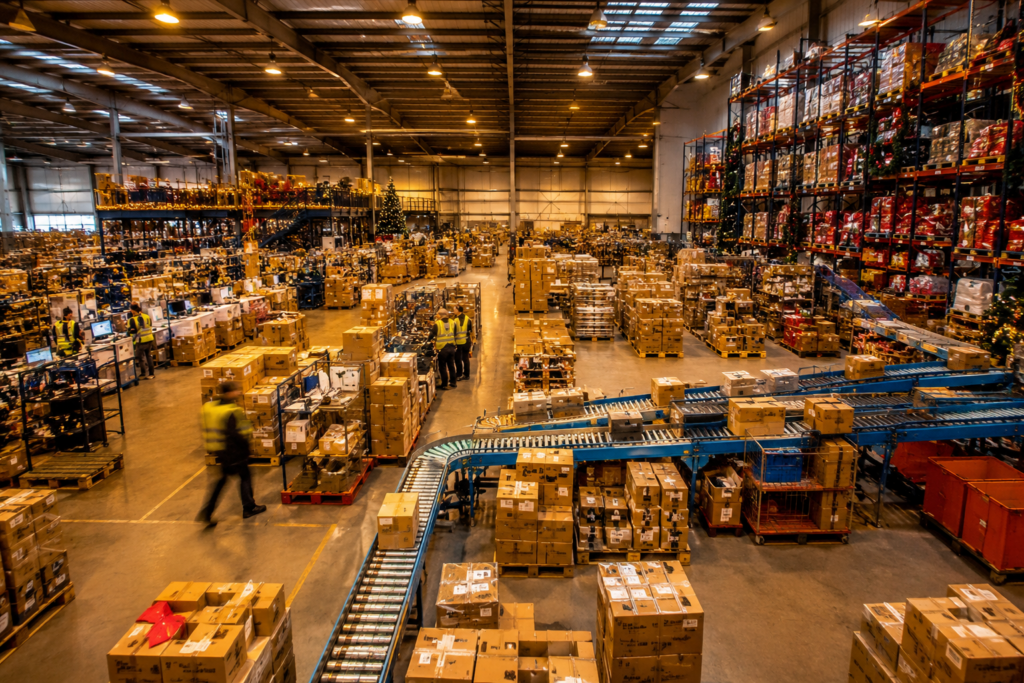
For UK eCommerce brands, the weeks between October and January are not just the busiest period of the year — they are often the period that determines whether the whole year was profitable. Black Friday, Cyber Monday, Christmas, Boxing Day sales and the January clearance cycle together create a sustained demand spike that can overwhelm even well-organised fulfilment operations.
Get your seasonal inventory management right and you capture revenue, delight customers and build the kind of brand loyalty that drives repeat purchases throughout the year. Get it wrong — stockouts, delayed despatch, incorrect orders, returns backlogs — and you hand that revenue to your competitors while spending months repairing your reviews.
At East Midlands Fulfilment Hub, we manage seasonal peaks for hundreds of UK eCommerce brands every year from our Nottingham 3PL centre. This guide shares exactly what the best-prepared brands do differently — and how you can apply those principles before your next peak season arrives.
1. Start Your Peak Season Planning Earlier Than You Think You Need To
The most common mistake UK eCommerce brands make with seasonal inventory is starting too late. If you’re thinking about your Christmas stock levels in October, you’re already behind. The brands that consistently perform well during peak season begin their planning in July or August at the latest — often earlier.
Early planning serves several critical functions:
- It gives your suppliers time to fulfil larger orders without rushing — rushed production means higher unit costs, quality compromises and shipping delays that land your stock in the warehouse too late to sell.
- It gives your 3PL time to plan capacity — your fulfilment partner needs to know your expected inbound volumes weeks in advance so they can allocate staffing, storage space and pick capacity appropriately.
- It allows you to spread your inbound shipments — rather than one enormous goods-in delivery the week before Black Friday, staggered arrivals throughout September and October are easier to process, check and put away accurately.
- It gives you a buffer for the unexpected — port congestion, shipping delays, production issues and supplier problems are facts of life in eCommerce. Early planning gives you time to absorb disruption without missing your sales window.
A practical starting point: pull last year’s weekly sales data and map it against the calendar. Identify the weeks where your volumes spiked and by how much. That is your baseline forecast. Build on it with any marketing activity, new product launches or channel expansion planned for this year.
2. Build Your Demand Forecast on Data, Not Instinct
Seasonal inventory planning that relies on gut feel consistently results in one of two expensive outcomes: overstock (capital tied up in unsold product, excess storage costs, markdown pressure after peak) or stockout (lost sales, disappointed customers, damage to your search and marketplace rankings).
A data-driven forecast is not complicated. Here is a straightforward approach:
Step 1: Baseline from Historical Sales
Take your weekly unit sales for the same period last year, broken down by SKU. If you were on promotion during certain periods, adjust the baseline to reflect underlying demand rather than promotional uplift.
Step 2: Apply a Growth Factor
If your business has grown 30% year-on-year, apply a 30% uplift to last year’s baseline. If you’re launching on a new channel (Amazon, TikTok Shop) for the first time this peak, factor in a conservative estimate of that channel’s contribution.
Step 3: Account for Planned Marketing
Promotional events — Black Friday deals, email campaigns, paid social pushes — can multiply your baseline demand by 3x to 10x in a single day. Plan the stock for each promotion explicitly, not just as a general uplift.
Step 4: Build in a Safety Buffer
For your top 20% of SKUs by revenue, carry a safety stock buffer of 15–20% above your forecast. The cost of holding slightly more stock than you need is almost always lower than the cost of a stockout on your best-selling products during your peak trading window.
Share your finished forecast with your 3PL. At EMFH, we use client forecasts to plan inbound receiving capacity, allocate storage bays and schedule additional pick and pack resource — meaning your peak is our peak, and we’re ready for it.
3. Use FIFO Stock Rotation to Protect Your Inventory Quality
First In, First Out (FIFO) is a warehouse management principle that ensures the oldest stock is always picked and despatched before newer stock of the same SKU. During peak season, when inbound volumes are high and the pressure to get orders out quickly is intense, FIFO discipline is easy to let slip — and the consequences can be costly.
Poor stock rotation during a peak period can result in:
- Products with earlier expiry dates being left in storage while newer units ship, leading to waste and write-offs
- Packaging that has been in storage longer becoming damaged or faded, resulting in returns and poor customer reviews
- Batch or lot number compliance issues for health, beauty and supplement products
- Seasonal or date-specific products (Christmas editions, limited runs) becoming unsellable if older units are not cleared first
A well-run 3PL enforces FIFO as standard practice. At EMFH, our warehouse management system logs the receipt date of every inbound batch and ensures pick sequences always pull from the oldest available stock. Every unit’s movement is tracked from arrival to despatch — giving you a full audit trail and the confidence that your inventory is being managed correctly, even during your busiest weeks.
4. Stagger Your Inbound Shipments to Avoid Receiving Bottlenecks
One of the most overlooked elements of peak season preparation is planning your inbound shipments with as much care as your outbound despatch. Brands that send one enormous container of Christmas stock in the first week of November create a receiving bottleneck — and if anything in that shipment is incorrect, damaged or missing, there is no time to recover before the peak begins.
A better approach is to stagger your inbound deliveries across a six-to-eight-week window before your first major promotional event. For Black Friday, that means shipments arriving throughout September and October. For Christmas, your primary stock should be received and put away by the end of November, with only top-up replenishment deliveries arriving in December.
Benefits of staggered inbound deliveries include:
- Faster receiving and put-away, with fewer errors and discrepancies
- Earlier opportunity to identify quality or quantity issues while there is still time to resolve them
- Lower inbound transport costs through smaller, more frequent deliveries rather than rush freight
- More predictable storage capacity requirements, allowing your 3PL to plan space allocation more accurately
- Stock available for early promotional activity and pre-Black Friday sales events
Communicate your inbound schedule to your 3PL at least four to six weeks in advance. The more notice we have at EMFH, the better we can prepare receiving bays, assign staff and ensure your stock is processed quickly and accurately on arrival.
5. Invest in Real-Time Inventory Visibility Across Every Channel
During peak season, the gap between what your stores say is in stock and what is actually available to pick and despatch can cost you significant revenue. Overselling — accepting orders you cannot fulfil — is one of the fastest ways to damage your reviews, your marketplace seller metrics and your customer relationships.
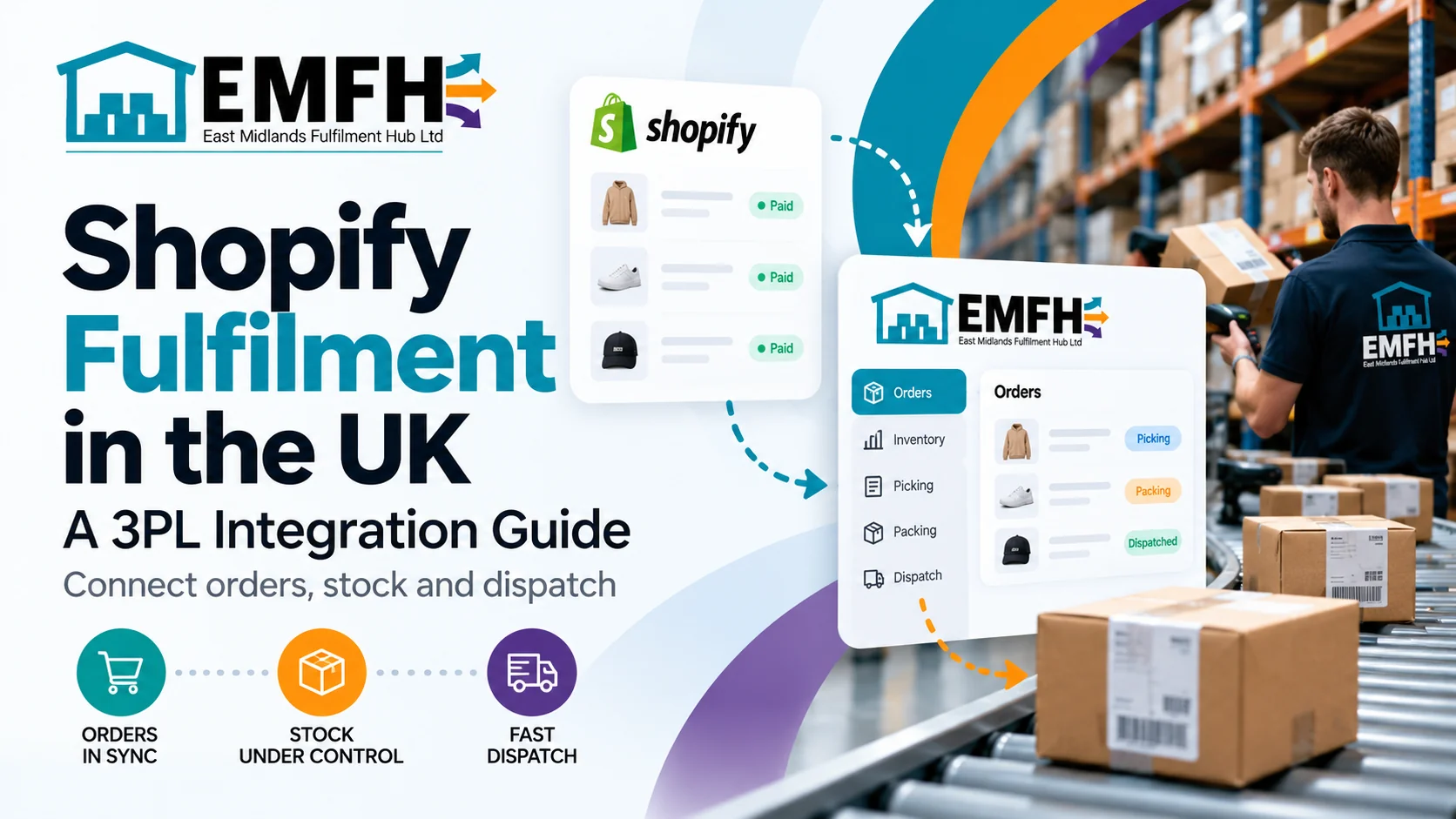
Real-time inventory visibility solves this. When your warehouse management system is integrated directly with your Shopify, WooCommerce, Amazon, eBay and TikTok Shop stores, stock levels update automatically every time a unit is picked for an order. There is no lag, no manual reconciliation and no risk of selling stock that has already been allocated to another order.
At EMFH, every client has 24/7 access to a live inventory dashboard showing:
- Real-time stock levels by SKU — what you have available right now, not what you had this morning
- Units on order — stock that has been sold but not yet despatched
- Inbound stock — deliveries booked in and expected
- Low-stock alerts — automated notifications when a SKU falls below your set threshold
- Returns in progress — units that have been returned and are awaiting inspection
During a Black Friday weekend when you might despatch ten times your normal daily volume, this level of real-time visibility is not a nice-to-have — it is essential for confident, accurate trading.
6. Communicate Delivery Expectations Clearly and Honestly
During peak season, customer expectations around delivery are paradoxically at their highest at exactly the time when delivery networks are most strained. The brands that manage this tension best are not necessarily the ones that deliver fastest — they are the ones that communicate most honestly and proactively.
Practical steps to set and manage delivery expectations during peak season:
- Display clear order cut-off dates prominently — “Order by 21st December for guaranteed Christmas delivery” reduces last-minute panic and return rates from disappointed customers.
- Update your despatch SLA messaging — if standard despatch is 1–2 working days, say so clearly. If it is same-day for orders before 2pm, make that your headline message.
- Send automated tracking updates — a despatch notification with a tracking link the moment the parcel is scanned by your courier dramatically reduces “where is my order?” contacts.
- Publish a real-time notice if delays occur — if carrier disruption is affecting despatch times, a proactive email or site banner prevents customer service contacts and manages expectation before customers complain.
At EMFH, tracking numbers are pushed back to your store automatically the moment our couriers collect. Your customer receives their despatch notification without any manual intervention — keeping them informed and reducing the volume of customer service contacts during your busiest period.
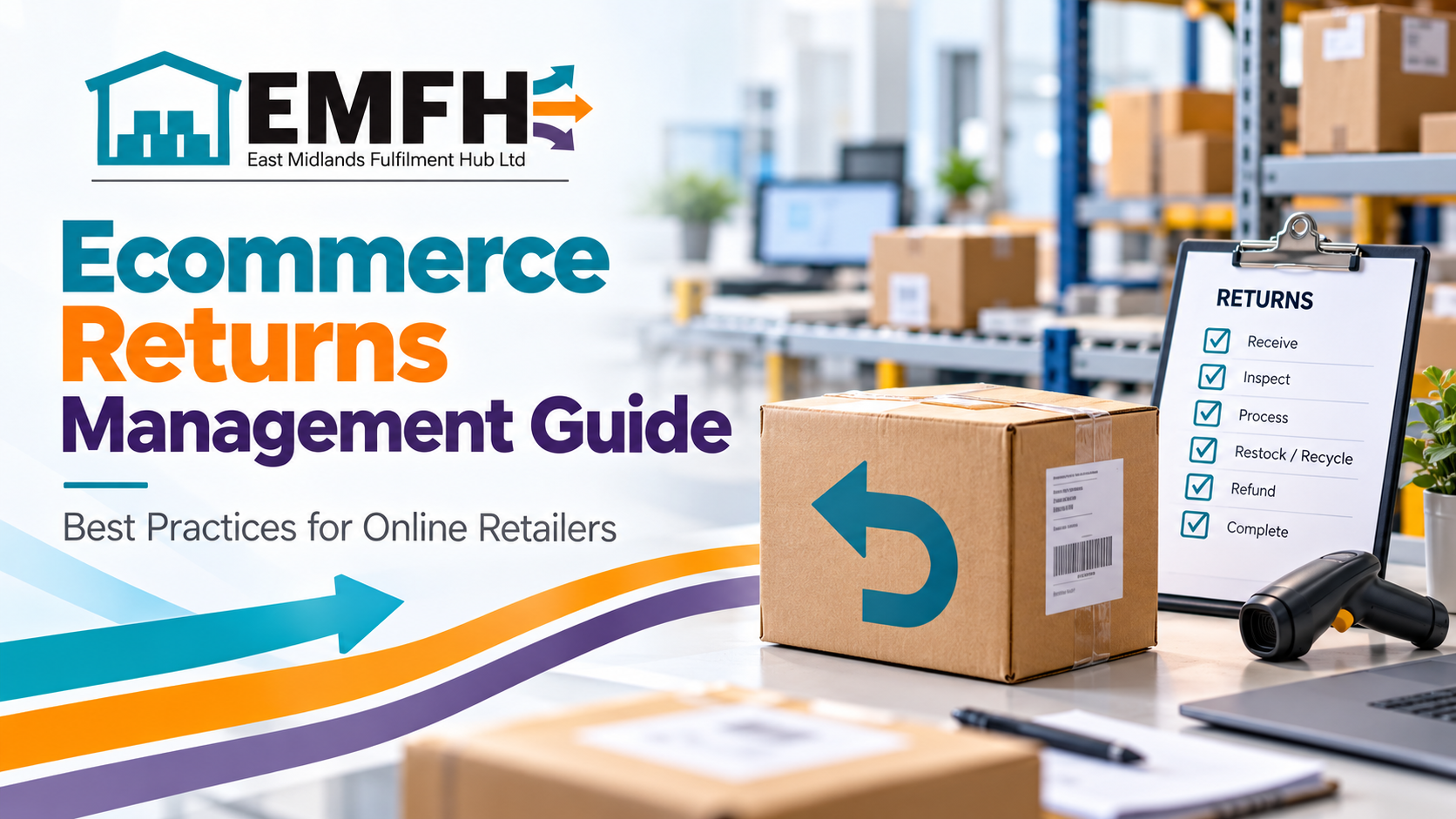
7. Plan Your Returns Process Before Peak Season, Not During It
The post-peak returns wave is as predictable as the peak itself, but many brands treat it as a surprise. In January, the volume of returns from Christmas gifting can equal 20–30% of December’s despatch volume for some product categories — particularly fashion, electronics and home goods.
If your returns process is ad hoc during normal trading, it will collapse during January. Planning your returns operation as carefully as your outbound fulfilment is one of the highest-return preparations you can make.
Key elements of a peak-ready returns operation:
- Pre-printed return labels in outgoing packaging — remove friction for customers by including a ready-to-use Royal Mail or Evri return label. The easier you make returning, the more likely customers are to buy again.
- Agreed inspection criteria — define in advance exactly what condition a returned item needs to be in to go back to saleable stock. This removes ambiguity for warehouse staff and speeds up processing.
- Capacity for increased returns volume — communicate your expected January returns volumes to your 3PL so they can plan inspection resource accordingly. At EMFH, we scale returns processing staff in January to match the post-Christmas wave.
- Fast stock recovery — the faster returned stock is inspected, reprocessed and returned to your live inventory, the faster it can be resold. At EMFH, saleable returns are back in your active stock within 1–2 working days of arrival.
8. Choose a 3PL That Scales With You — Not One That Struggles at the Same Time as Everyone Else
Your fulfilment partner’s capacity during peak season is just as important as your own stock levels. A 3PL that is overwhelmed by demand from its other clients at exactly the time your orders are spiking is a liability, not an asset.
When evaluating whether your 3PL is genuinely peak-ready, ask:
- How do you staff up for peak season, and what is your lead time for additional resource?
- What is your maximum daily pick and pack capacity, and how does that compare to my peak volume forecast?
- Do you guarantee the same-day despatch cut-off during Black Friday week and the run-up to Christmas?
- How do you communicate with clients if there are any delays or capacity issues?
- What carrier capacity have you pre-booked for peak season?
At EMFH, we plan our peak season staffing and carrier capacity months in advance, working directly from our clients’ demand forecasts. Our 2pm same-day despatch cut-off is maintained throughout peak season — not just when volumes are comfortable. We communicate proactively with clients if anything affects their orders, and every client has a named account manager who is contactable directly throughout the year, including during peak periods.
The Peak Season Preparation Checklist
To summarise, here is a practical timeline for UK eCommerce brands preparing for a peak trading season:
| When | Action |
|---|---|
| 12–16 weeks before peak | Analyse last year’s sales data. Build initial demand forecast by SKU. Share with suppliers and 3PL. |
| 10–12 weeks before peak | Place purchase orders with suppliers. Confirm inbound delivery schedule with 3PL. Book carrier capacity. |
| 6–10 weeks before peak | First staggered inbound deliveries arrive. Begin receiving and put-away. Check stock against PO. |
| 4–6 weeks before peak | Confirm promotional calendar and stock allocations. Update delivery expectation messaging on store. Prepare return label inserts. |
| 1–3 weeks before peak | Primary stock should be fully received and put away. Top-up replenishment only. Brief customer service team on despatch SLAs. |
| During peak | Monitor live inventory dashboard daily. Act on low-stock alerts immediately. Communicate delivery expectations prominently. |
| Post-peak (January) | Process returns promptly. Review actual vs forecast by SKU. Identify stockout and overstock patterns. Plan for next year. |
How EMFH Helps UK eCommerce Brands Through Peak Season
East Midlands Fulfilment Hub is a Nottingham-based 3PL fulfilment centre with over 20 years of experience supporting UK eCommerce brands through every peak season. Our central Nottingham location in the UK’s Golden Triangle — between London, Birmingham and Leeds — gives every parcel we despatch fast, cost-effective access to every UK postcode, with most standard deliveries arriving within 1–2 working days.
During peak season, EMFH clients benefit from:
- Same-day despatch guaranteed — 2pm cut-off maintained throughout Black Friday, Christmas and January
- 99.8% order accuracy — barcode scanning and weight checking on every order, every day of the year
- Real-time inventory dashboard — live visibility of stock levels, orders and returns 24/7
- Staggered inbound receiving — we plan capacity around your delivery schedule so inbound stock is processed without delay
- Multi-carrier flexibility — DPD, Royal Mail, Evri, DHL and Whistl, with carrier selection optimised per shipment
- Dedicated account manager — one point of contact who knows your account and your seasonal peaks
- Fast returns processing — returned stock inspected and back in saleable inventory within 1–2 working days
If you want to find out how EMFH can help your eCommerce brand prepare for and perform during your next peak season, get a free, no-obligation quote or call our team on 0115 646 1101. We respond to all enquiries within one working hour.
East Midlands Fulfilment Hub — 133 Glaisdale Drive West, Bilborough, Nottingham, NG8 4GY
T: 0115 646 1101 | E: 3pl@emfh.co.uk