
Amazon FBA prep is the work needed to make products and shipping cartons ready for Amazon’s inbound receiving process. For UK sellers, that means checking the exact product, applying the required identification, protecting the sellable unit and matching the physical shipment to the instructions in Seller Central. It is a separate task from simply booking a courier.
This guide explains how to organise a repeatable preparation workflow, what to include in a prep brief and which checks to complete before stock leaves your warehouse. It supports our Amazon FBA prep service in Nottingham; it does not replace the current requirements shown for your account, marketplace and products.
By East Midlands Fulfilment Hub · Published 28 October 2026
Start with the product and shipment, not the label printer
Two products that look similar can need different handling. A single item, a multipack, a product with a battery and an expiry-dated item may have different preparation requirements. Establish the intended selling unit before purchasing packaging or sending a supplier instructions.
Open the relevant product and shipment guidance in Seller Central. Check eligibility, condition, barcode choice, preparation category and the current shipping requirements. If anything is unclear, resolve it before the assembly run. An old supplier checklist or a screenshot from a different marketplace is not a reliable specification.
Amazon’s UK FBA overview directs sellers to its current packaging and preparation guidance and inbound shipment workflow. Use that account-specific guidance as the source of truth, particularly when product rules or service options change.
A practical Amazon FBA prep checklist for UK sellers
1. Build an accurate stock and SKU record
List the seller SKU, ASIN where applicable, product description, variant, condition and quantity. Keep a clear connection between the item on the receiving bench and the item in the shipment plan. Similar colours, sizes or pack quantities should not rely on memory or an abbreviated handwritten description.
Record the expected inbound quantity and the quantity actually received. Separate damaged, short-delivered, unidentified or suspect stock so that it cannot enter the packing queue unnoticed. Agree who can approve substitutions, relabelling or a quantity adjustment.
2. Confirm the sellable unit
Decide what the customer is buying: one product, a sealed multipack or a set of different components. A shipping carton containing twelve individual products is not automatically one twelve-piece retail set. The listing, packaging and inventory record must describe the same offer.
For a kit or set, document the components and how they remain together during handling. Keep a signed-off sample or reference photograph. Our kitting and rework service can be discussed alongside prep where products need assembly before shipment; suitability depends on the product and brief.
3. Use the correct product identification
Follow the barcode option required for the item in the current workflow. Where an Amazon barcode or FNSKU label is required, check it against the exact product and condition rather than assuming that every similar-looking unit uses the same label.
Test readability on the final packed unit. A label that scans before wrapping may become hidden, creased or reflective after packaging is added. Deal with conflicting scannable codes according to the applicable Amazon instructions, while preserving required product information.
4. Check preparation for the product type
Create a product-specific inspection point for fragile items, liquids, sharp edges, textiles, sets and other stock needing additional protection. Batteries, dangerous goods and expiry-dated goods require their own eligibility and handling checks. Do not assume that a general-purpose prep provider accepts every category.
Confirm packaging specifications, warnings and visibility of dates or other mandatory information in the relevant guidance. Avoid copying a universal bag thickness, box weight or shelf-life figure into a permanent warehouse instruction: requirements can vary and change.
5. Reconcile carton contents with the shipment plan
After unit preparation, count the contents assigned to each carton. Check the physical quantities against the final shipment record. Print and apply the current carton or shipment identifiers to the corresponding cartons, not to a nearby batch that happens to look the same.
Keep carrier identification distinct from product identification. A courier label does not replace an FBA shipment label. If quantities or the packing configuration change after labels are produced, check whether the shipment record and labels need to be updated before collection.
6. Complete a final release check
- Confirm that approved stock, quantities and destinations match the final shipment information.
- Scan-check a representative prepared unit and check all product variants in the run.
- Inspect the finished packaging, set contents and carton labelling against the brief.
- Record unresolved discrepancies and prevent affected cartons from being released.
- Keep collection or handover evidence and the records needed for a receiving query.
Who is responsible when a supplier or prep centre does the work?
Outsourcing preparation does not remove the need for clear seller instructions and oversight. Agree who approves product eligibility, provides accurate SKU data, produces labels, updates the shipment plan and authorises rework. Do not share a main account password when appropriate delegated access can be used.
A useful handover separates responsibilities into three parts: information supplied by the seller, checks performed by the prep team and decisions that require seller approval. Confirm the permitted access and approval route before stock arrives. This is especially important when several suppliers deliver parts of one shipment.
What information should you send for a prep quote?
- Product list, variants, dimensions and approximate unit quantities.
- Whether products arrive individually packed, in supplier cartons or as loose components.
- Required activities such as inspection, labelling, protective packaging or set assembly.
- Product restrictions, expiry or batch information that needs assessment.
- Expected delivery date, shipment method and the point at which labels will be available.
- What happens to shortages, damaged goods, surplus packaging and rejected units.
Ask for receiving, preparation, materials, storage, rework and onward shipping to be identified separately where relevant. The cheapest per-label rate can be a poor comparison if it excludes checks your stock actually needs. Our UK fulfilment costs guide explains how to compare a wider service brief.
Mistakes that make receiving harder
Common avoidable problems include sending stock before the product data is agreed, mixing variants without a clear separation method and changing a set after its labels have been printed. Another is treating a passed sample as permission to stop checking the rest of the run.
Build a stop-and-query process rather than asking staff to guess. A clear exception record should show the SKU, affected quantity, photographs where useful, required decision and release approval. This creates a better basis for resolving an inbound discrepancy than trying to reconstruct the shipment after delivery.
Frequently asked questions about Amazon FBA prep
Do all products need an FNSKU label?
Do not assume one barcode method applies to every product or account. Check the current barcode eligibility and labelling instructions for the exact offer in Seller Central. Where an Amazon barcode is required, make sure the label belongs to that product and condition.
Can my supplier prepare the products?
A supplier may be able to complete the agreed work, but you still need a current brief, an approved sample and a way to verify the finished result. Clarify who corrects an error and who checks the final cartons before they are sent.
Is FBA prep the same as a 3PL sending customer orders?
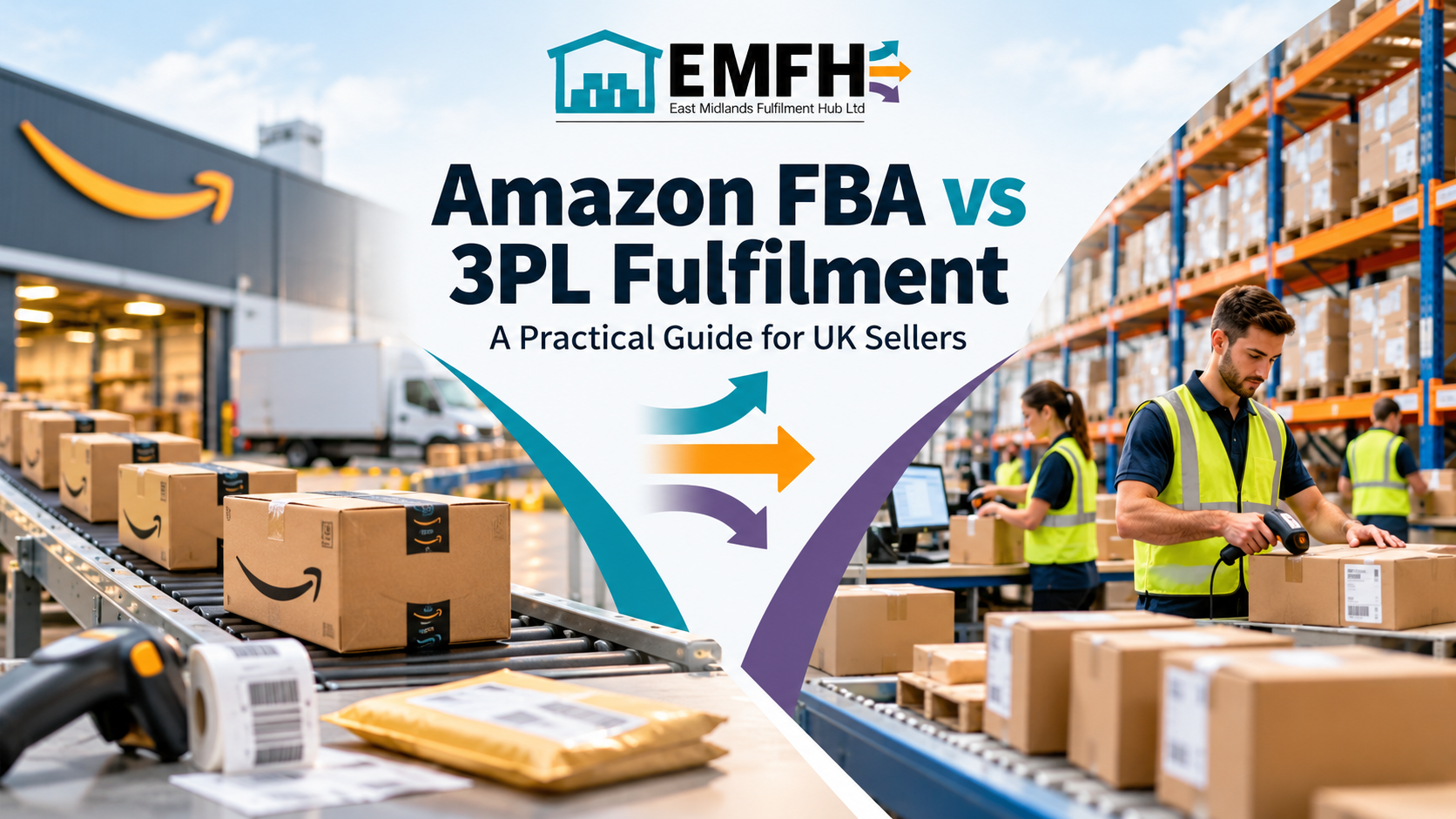
No. FBA prep readies inventory for an Amazon inbound shipment. A direct-to-customer 3PL stores stock and fulfils individual orders under its own service agreement. Some businesses use both. See our Amazon FBA versus 3PL comparison for the distinction.
Plan your next FBA shipment with EMFH
EMFH provides Amazon FBA prep services from Nottingham. Send your product list, quantities and preparation brief so the team can assess the work, responsibilities and timings before you book stock in. Contact EMFH to discuss your FBA prep requirements.
Official guidance: Amazon UK: Fulfilment by Amazon and Seller Central: product packaging requirements. Check the current marketplace and product instructions before every new shipment configuration.