
Choose a UK fulfilment partner by testing how well its operation fits your products, sales channels, order profile and customer promises. Compare service scope, systems, dispatch arrangements, stock control, returns, total costs and contract terms using the same brief.
The strongest proposal explains how routine orders and difficult exceptions will be handled. This checklist helps you move beyond a headline price or a warehouse tour and assess the working relationship.
Start with a clear operating brief
Prepare your SKU count, dimensions, weights, monthly orders, daily peak, average units per basket and expected growth. Describe your current sales channels, supplier deliveries, returns volume and any labelling or packaging requirements.
Include awkward details: mixed cartons, oversized items, products with expiry dates, bundles and frequent address changes. These are the details that determine whether a provider is a good operational fit.
1. Confirm product and handling suitability
Ask the provider to explain how it would receive, store, pick and pack a representative sample of your range. Confirm any restrictions before transferring stock. An operation designed for small standard parcels may need different processes for large, fragile or specialist goods.
For additional work such as Amazon FBA preparation, agree the exact tasks, approval process and pricing. A general promise of flexibility should become a documented specification.
2. Test the integration with real scenarios
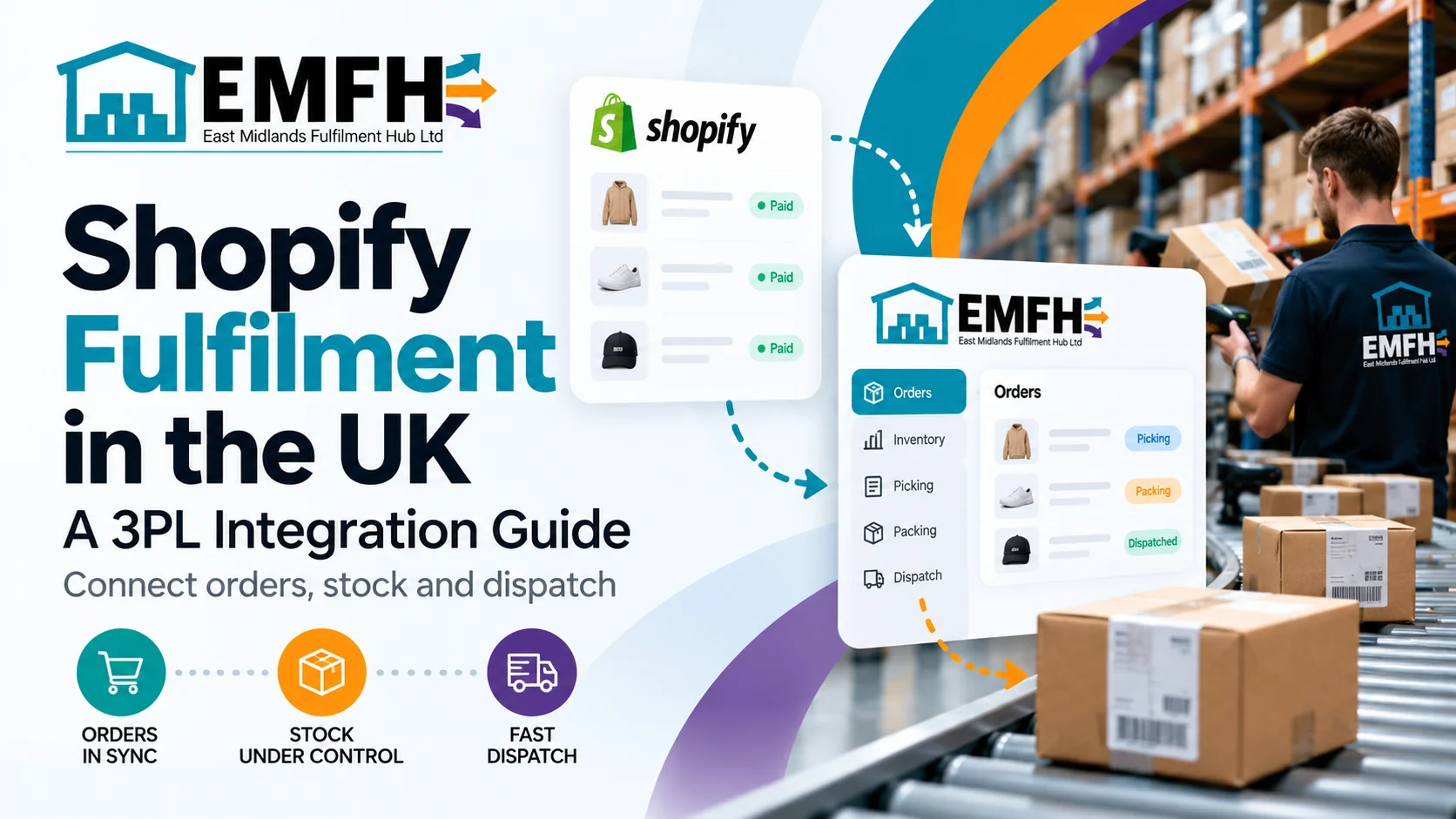
A platform logo on a website is a starting point. Verify the connection for your particular store setup, including order import, product mapping, stock updates and tracking. Ask which system is authoritative when records disagree.
Test multi-item orders, cancellations, partially available stock and returns. Confirm how the warehouse receives and acknowledges urgent changes. A cancellation sent by your store may arrive after picking has started, so timing rules matter.
3. Understand dispatch commitments
Clarify the order cut-off, working days, stock-availability conditions and carrier collection schedule. Ask how a late order, payment hold or invalid address changes the commitment.
Separate warehouse dispatch from carrier delivery. Review the shipping services available for your actual parcel profile and destinations, including any exclusions or additional charges.
4. Examine stock control and reporting
Ask how goods-in differences, quarantine, damaged stock and cycle counts are recorded. Find out what inventory information you can see, how frequently it updates and how discrepancies are resolved.
A useful demonstration follows one SKU through receipt, put-away, an order and a return. This tests whether the system provides a traceable stock history, rather than just a total quantity.
5. Agree the returns workflow
Define the inspection standard, photos required, condition categories and authority to restock, rework or dispose. Establish who decides refunds and how the warehouse communicates inspection outcomes.
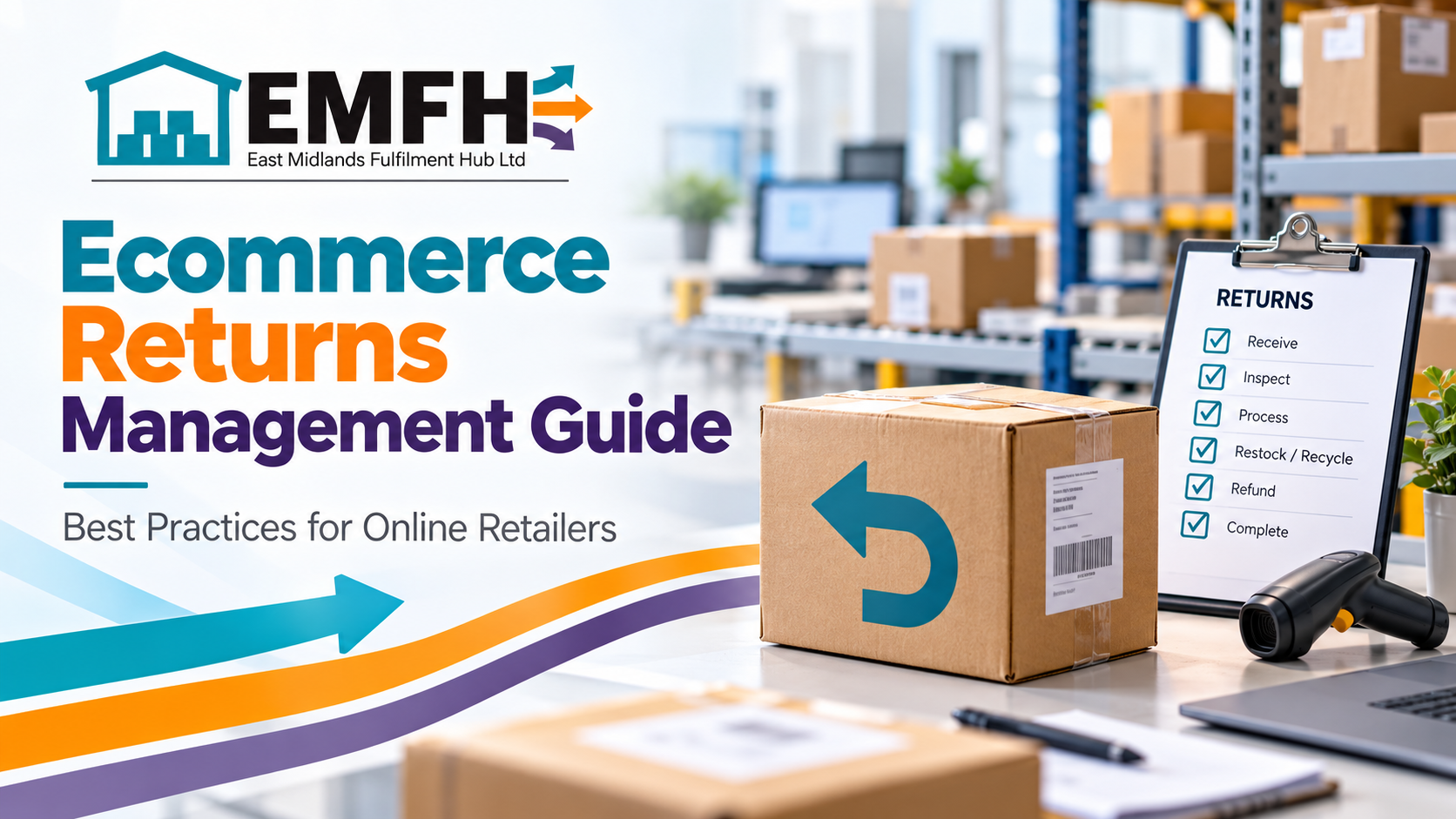
Compare turnaround commitments and charges for the actual return work. Read about EMFH’s returns management service when preparing your requirements.
6. Model total costs
Use identical normal, peak and low-volume scenarios for every quote. Include receiving, storage, pick and pack, materials, shipping, returns, minimums and additional work. Keep setup and stock-transfer costs visible.
Our UK fulfilment costs guide provides a comparison framework. Review what triggers a price change and how much notice applies.
7. Check communication and accountability
Who owns your account, who covers absences and how are urgent issues escalated? Agree routine reports and review meetings. Ask to see how an unresolved stock issue would be tracked through to closure.
Where references are available, ask customers with similar requirements about problem resolution and communication. Match testimonials to your needs rather than assuming every customer uses the same service.
8. Review the contract and transition plan
Check service definitions, liability, insurance responsibilities, claims procedures, notice periods and stock-release arrangements. Make sure the pricing schedule and operational specification match the proposal you evaluated.
Plan the transfer: stock reconciliation, product data, test orders, launch date and a fallback route. A short pilot with representative orders can reveal issues before all channels move.
Frequently asked questions
Should I choose the closest warehouse?
Proximity can make visits easier, but product suitability, carrier access, customer destinations and operating performance may matter more.
Is the lowest pick fee the best value?
Only if the full cost and service fit are competitive. Check additional picks, materials, minimums and exception charges.
What should I see during a demonstration?
A routine order, a stock discrepancy and a return. Those examples reveal how the operation works when a transaction needs attention.
Assess EMFH against your requirements
Review our fulfilment services and contact EMFH in Nottingham with your operating brief. We can discuss the fit, required workflows and information needed for a tailored proposal.